 Previous
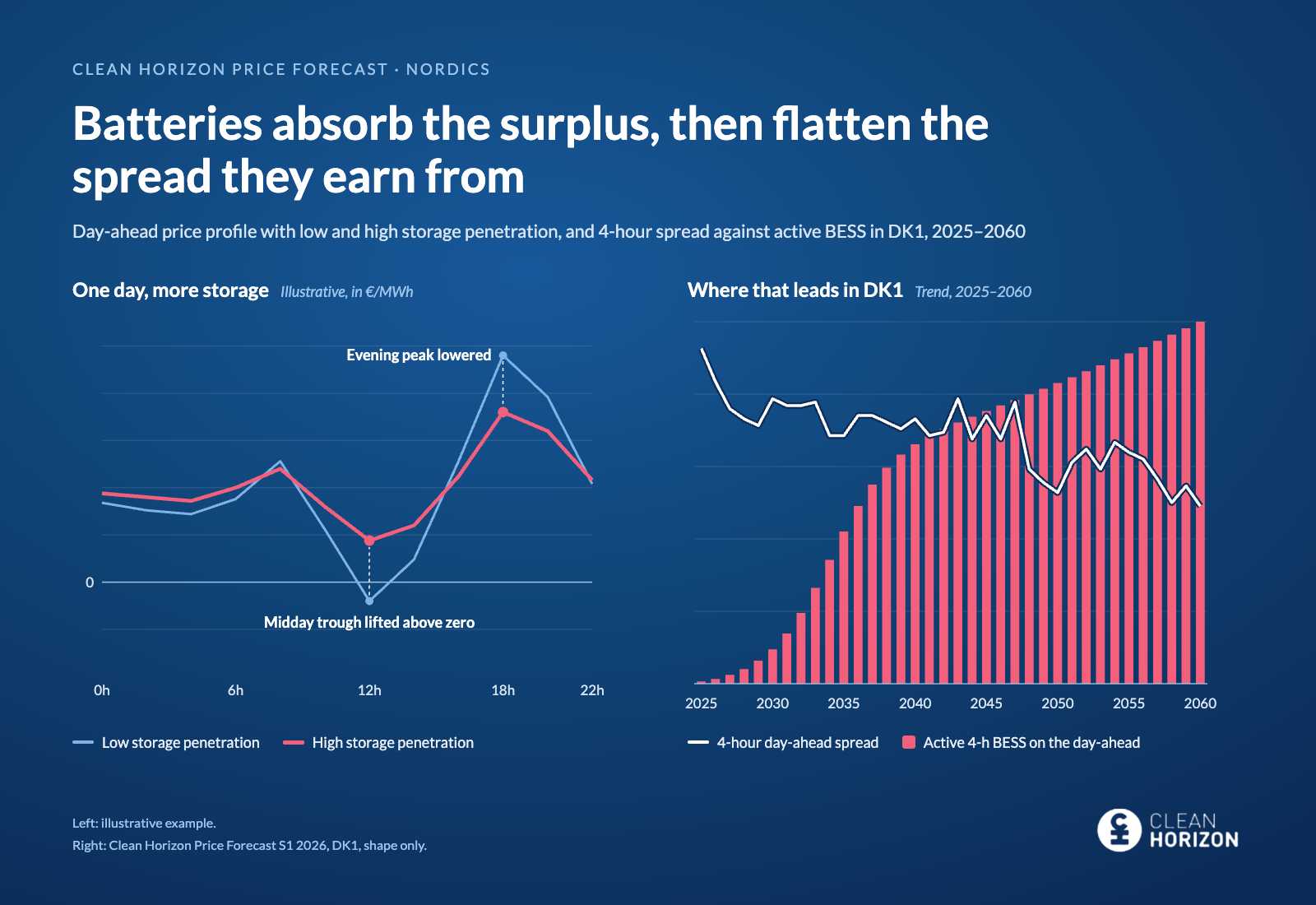
Negative prices on Day-Ahead markets: why and what's next?


 January 29, 2026
 How are energy storage revenues evolving in France? What regulatory changes can the market expect in 2026? Our experts answer these questions and many more in this article.
Evolution of grid-connection “gabarit” in withdrawal zones
A new map with available grid connection capacities for storage under withdrawal limitations will be published by Q1 2026.
France expected to join MARI by the end of Q1 2026
Joining MARI will open new opportunities in balancing markets, enabling storage assets to participate more actively and enhance their revenues as the remuneration will shift to pay-as-clear.
Revised capacity mechanism – first auction expected in 2026
A redesigned capacity mechanism with an inaugural auction with multi-year contracts scheduled for July 2026.
TURPE 7 storage option
In August the storage option grid fee structure will be unforced, enabling storage to be remunerated for congestion management.
New market for tertiary reserves (mFRR) procurement in France
France is set to introduce a new market dedicated to mFRR capacity with 15min products.
This change is expected to create a new revenue stream for BESS.
Together, these developments are set to significantly strengthen the business case for storage assets in France.
As part of the implementation of the technical requirements for classified installations relating to the environmental protection (ICPE) regulations applicable to stationary battery storage systems (category 2925-2), the Directorate-General for Risk Prevention has published a new working draft for industry consultation.
This version introduces numerous changes compared to the previous working draft, the most significant being:
This working version amends the previous version, which was submitted for consultation in June 2024.