 Previous
Corentin Baschet's key takeaways from Solarplaza Summit Poland session

 June 5, 2026
 Romania’s energy storage market is reaching an inflection point.
Romania is rapidly emerging as one of the most attractive storage markets in Central and Eastern Europe. But as the market accelerates, distinguishing structural opportunities from short-term market signals is becoming increasingly important for any actor entering the market.
We’re pleased to share key takeaways from Louis Rosset’s session at Solarplaza Summit Romania!
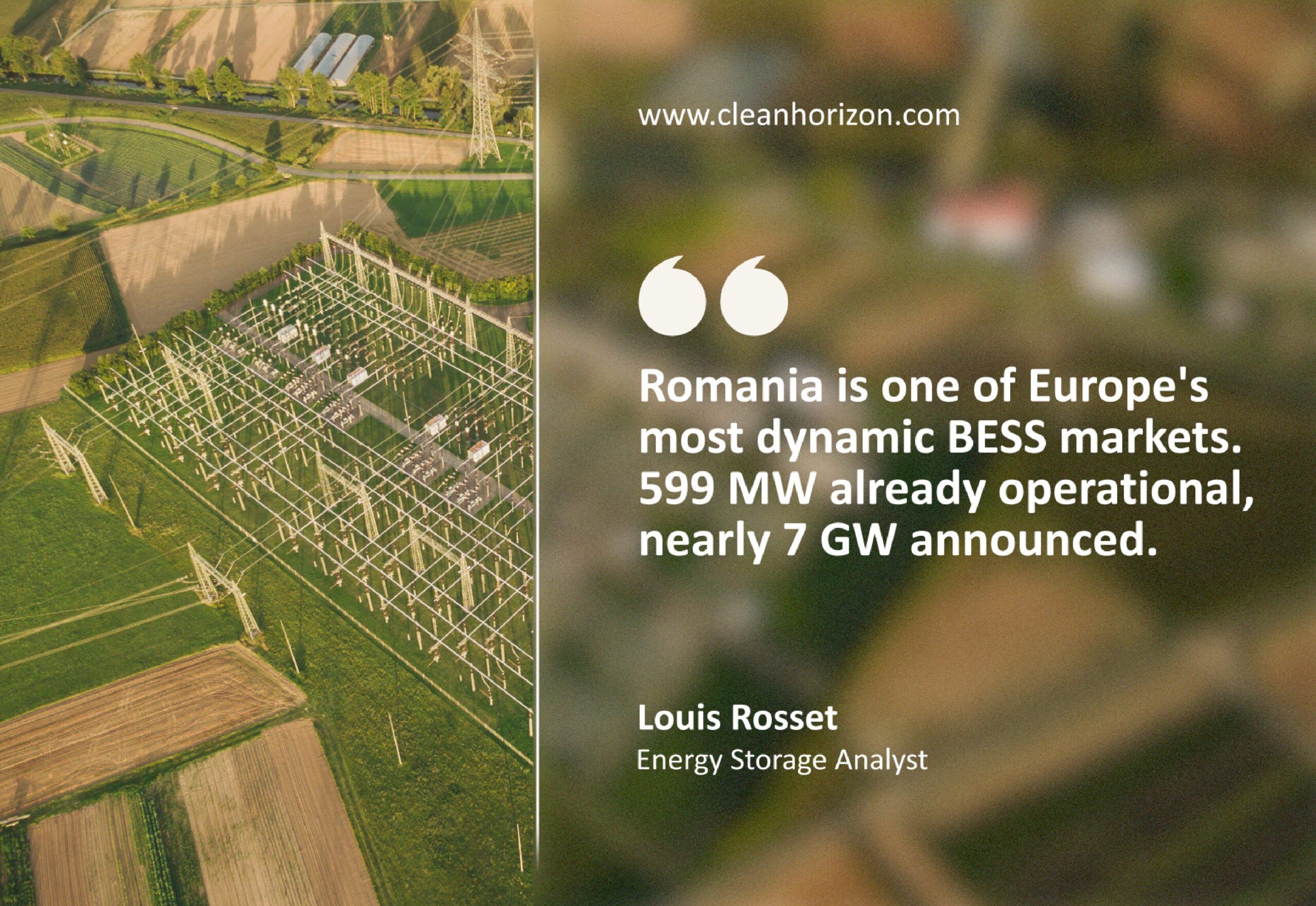
599 MW of utility-scale storage is already operational in Romania and nearly 7 GW has been announced. The state subsidies (i.e.Modernization Fund’s €300M tender) are a game changer for accelerating deployment.
Romania’s electricity mix is progressively transitioning from fossil fuels to more renewable energy sources, especially solar and wind.
The market stands among the most supportive European markets for BESS subsidies. Subsidies for BESS projects in Romania have already been allocated, and others are planned, financed by the EU, through tenders and Contracts for Difference (CfDs).
Ancillary services drive the revenues:
Batteries have been earning well above the viability threshold in Romania’s balancing market, but with 1.7 GW enough to cover the entire ancillary service need, saturation is coming fast.
Day-ahead and intraday markets will become the primary revenue driver as the market matures. Projects built with that in mind, and supported by subsidies, can still achieve good returns.
Bottom line: Romania remains a highly attractive storage market, but future project success will increasingly depend on revenue stacking strategies that go beyond ancillary services.
Would like to discuss the Romanian market, storage revenues or project opportunities? Let’s talk